Trump’s Strike on Iran Labeled Reckless as Global Tensions Surge

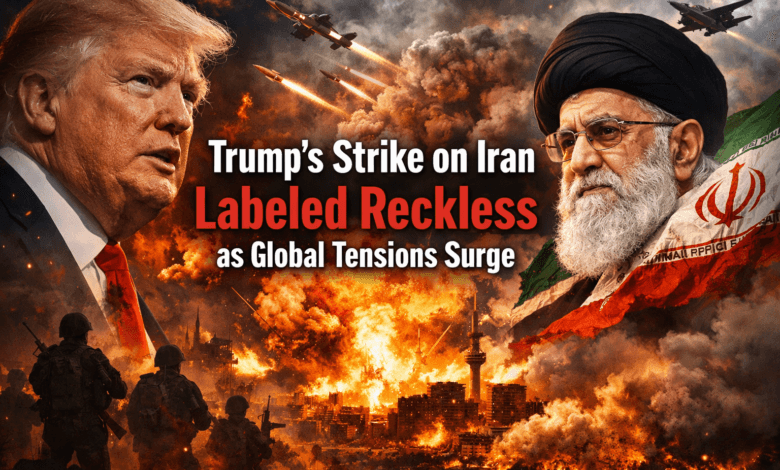
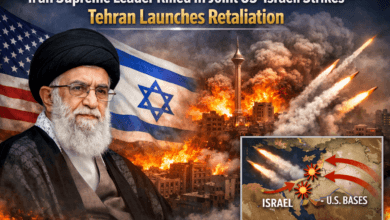
President Donald Trump, in a move that has sent shockwaves across the globe, coordinated a massive military strike against Iran in the early hours of Saturday morning. The operation, conducted in partnership with Israeli forces, targeted several high-profile Iranian nuclear facilities and government infrastructure sites, effectively pushing the two nations to the brink of a full-scale war. Trump characterized the offensive as a necessary step to prevent nuclear proliferation and called upon the Iranian public to “seize control of your destiny,” suggesting that the ultimate goal of the operation is a total regime change in Tehran.
The Military Operation: A Sudden Escalation
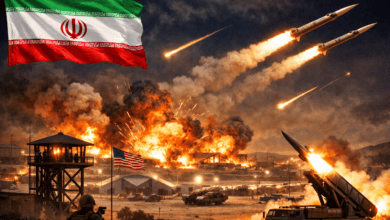
The strikes occurred with little warning to the international community or the United States Congress, drawing immediate comparisons to previous unilateral military actions. Reports indicate that the U.S. and Israel utilized advanced stealth technology and long-range precision missiles to disable air defense systems before striking the heart of Iran’s nuclear program. While the Trump administration maintains that the strikes were a surgical success, initial reports from the region suggest significant damage to civilian infrastructure adjacent to the military targets. This escalation marks a definitive end to any hopes of a diplomatic resolution regarding the 2015 nuclear deal, which Trump had long criticized and previously abandoned.
As the news of the bombardment broke, Daryl G. Kimball of the Arms Control Association noted that this development comes eight years after the U.S. initially walked away from the Joint Comprehensive Plan of Action (JCPOA). Critics argue that the vacuum left by the deal’s collapse directly led to this moment of high-stakes conflict. You can read more about the history of the nuclear deal at the Arms Control Association.
A Deviation from Campaign Promises
During his 2024 campaign, Donald Trump frequently messaged himself as the candidate of peace, promising voters that he would end foreign wars and reduce the American military footprint in the Middle East. However, the decision to launch what many are calling an “illegal and reckless war” stands in stark contrast to those isolationist promises. The sudden pivot to regime change has left many of his supporters and detractors alike questioning the strategic rationale behind such an aggressive gamble. Analysts suggest that the influence of hardline advisors and regional allies may have shifted the President’s focus toward a more interventionist stance.
For more on the political implications of these decisions, see our analysis of the Trump administration’s foreign policy shifts. The shift has ignited a firestorm of debate in Washington, where even some Republican allies have expressed private concerns about the lack of a long-term exit strategy or a plan for the humanitarian fallout that inevitably follows such large-scale military actions.
Bipartisan Backlash and Constitutional Questions
The domestic reaction has been swift and sharply divided. In Delaware, the congressional delegation issued a joint statement criticizing the “reckless” nature of the strikes, arguing that the President exceeded his constitutional authority by bypassing Congress. Similarly, in North Carolina, leaders on both sides of the aisle offered divided reactions; some praised the show of strength while others warned of the national security risks of an unprovoked conflict. In Maine, political leaders emphasized the need for transparency, with many questioning whether the strikes would actually make the United States any safer or simply ignite a regional powder keg.
Experts in constitutional law have pointed out that the War Powers Resolution requires the President to consult with Congress in every possible instance before introducing U.S. Armed Forces into hostilities. By launching a massive operation without such consultation, the administration faces potential legal challenges and a deepening rift with the legislative branch. Critics argue that the move undermines the democratic process and sets a dangerous precedent for future executive overreach.
Expert Warnings: A Reckless Path Forward
Matt Duss from the Center for International Policy has described the decision to pursue regime change as fundamentally flawed. In interviews following the strike, Duss emphasized that overthrowing a governing regime rarely results in the stability that proponents of intervention promise. Instead, such actions often lead to power vacuums, civil unrest, and the rise of even more extremist factions. “This is reckless adventurism,” said retired Space Force colonel Bree Fram, warning that the strikes serve as a massive distraction from domestic issues and bring the world one step closer to an extended, multi-front war.
Simon Tisdall of The Guardian echoed these sentiments, writing that the world is now “on edge” as the bombing triggers a potential cascade of violence. Tisdall argued that there was no immediate need for this level of aggression and that the attack will likely seed new hatreds and terrorist vendettas that could haunt the international community for decades. The consensus among many foreign policy veterans is that while Iran’s leadership remains a significant challenge, military strikes on this scale are more likely to harden resolve than to encourage a peaceful transition of power.
The Global Economic and Security Fallout
Beyond the immediate military and political concerns, the global economy has already begun to react to the instability. Oil prices surged by nearly 15% in the hours following the announcement of the strikes, as investors fear a closure of the Strait of Hormuz, a vital artery for the world’s energy supply. Shipping companies have already begun rerouting vessels, leading to delays and increased costs for consumer goods. Economists warn that a prolonged conflict in the Middle East could trigger a global recession, compounding the economic challenges already facing many nations.
Security agencies across Europe and North America have also raised threat levels, fearing retaliatory cyberattacks or terrorist incidents linked to the escalation. The “reckless” nature of the attack, as described by critics, stems from the unpredictability of the Iranian response. With proxies across Lebanon, Iraq, and Yemen, Iran has multiple avenues through which it can strike back at U.S. interests and allies, potentially turning a targeted operation into a regional conflagration that draws in multiple neighboring states.
Conclusion: An Uncertain Future
As the smoke clears over Tehran and other targeted cities, the primary question remains: what comes next? The Trump administration has yet to provide a detailed plan for the “day after” the strikes. Without a clear diplomatic path or a strategy for managing the fallout, the U.S. risks becoming entrenched in another decades-long conflict in the Middle East—the very thing the President once promised to avoid. The international community remains largely skeptical of the administration’s claims of success, and the label of “reckless” continues to dominate the global discourse.
The coming days will be critical as the UN Security Council convenes an emergency session and world leaders attempt to de-escalate the situation. Whether this military action achieves its stated goals or simply serves as the opening chapter of a new and devastating war remains to be seen. For now, the world remains on a knife-edge, watching as one of the most significant military escalations in recent history unfolds in real-time.